Top 10 Best Ancient Civilizations
When we think of ancient civilizations, it's easy to be swept away by images of towering pyramids, sprawling cities, and mysterious ruins. These societies were once the pulse of human progress, laying the foundations for everything from art and architecture to governance and philosophy. But deciding which civilization stands above the rest is a challenge. Each culture brought something unique to the world stage, whether it was an innovation, a perspective, or a legacy that endures in one form or another.
From the shores of the Mediterranean to the banks of the Ganges, the most influential civilizations shaped not only their own time but ours as well. These cultures wrestled with the core questions of life: how to govern, how to organize, how to worship, and how to build something that would last beyond their generation. Some answers have been more enduring than others, while some faded into history's shadows, waiting to be rediscovered.
-
Greece
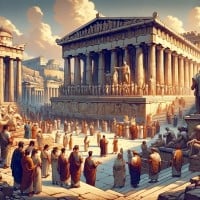
Ancient Greece is known for its influential city-states such as Athens and Sparta, which contributed significantly to Western philosophy, politics, and the arts. The civilization is also credited with founding the Olympic Games and advancing scientific thought.
Everything we have today and everything we have achieved, we owe it to the Greeks. There is nothing, absolutely nothing, that the Greeks hadn't mastered. Today's architecture is based on Ancient Greek architecture. Literature started in Greece. Homer wrote the Iliad and the Odyssey thousands of years ago, and they are still read today because of Homer's unique style of writing.
Ancient Greek mythology is awesome. Their gods, their heroes, their monsters... everything has its root in Ancient Greece. Even the computer! Wherever you search, whatever topic it is, an Ancient Greek philosopher has likely written about it or even mastered it. Ancient Greece is undoubtedly the best civilization on the planet that ever lived.
-
Georgia

The ancient Kingdom of Georgia, known as Iberia in classical antiquity, was located in the Caucasus region. It played a significant role as a cultural and commercial crossroads between Europe and Asia.
One of the 14 unique alphabets, acknowledged as one of the five most beautiful alphabets in the world. Cradle of wine, medicine, and gold mining. One of the oldest currencies from the 6th century because it was made of silver.
The first hominids in Europe, dating back 1.8 million years, were discovered in Dmanisi, Georgia. Full of remnants of castles and Christian churches from many different ages. The country went through a lot of wars since everyone wanted to take over the best place.
A small country with everything: modern civilization, villages with old traditional families, and wild, uninhabited landmarks. Sea resorts, beautiful valleys, mountains and peaks. Climate for every taste.
-
Egypt
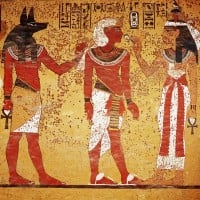
Ancient Egypt, centered around the Nile River, is renowned for its monumental architecture, including pyramids and temples, as well as its hieroglyphic writing system. The civilization was governed by powerful pharaohs and made significant contributions to mathematics, medicine, and art.
The Norse evolved from the barbarians who sapped away at Rome. Rome stole from Greece when it came to culture, architecture, and even land. Greece, of course, stole from Egypt, which has been a continually habitable nation for nearly six thousand years. While each of these peoples has drawn inspiration from others, only Egypt stands by itself - it is the foundation that holds up all Western civilization.
It is a civilization that made unparalleled progress in a land that was not even able to provide any wood, let alone nourish a civilization that would stand for millennia. The last of the standing Wonders of the World belong to Egypt, and it is considerably older than all the ones that rose and fell after it. Most of their achievements are a mystery to people even today, attesting to their creativity and unending ingenuity.
-
Rome
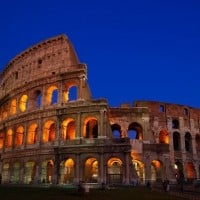
The Roman Empire, which originated from the city of Rome, expanded to dominate much of Europe, North Africa, and the Middle East. It is known for its advancements in law, engineering, and military strategy, as well as for laying the foundation for Western civilization.
The Romans were way ahead of their time. While most citizens of the world were living in huts and eating wild animals and such, the city of Rome was already dealing with building height regulations (buildings had to be limited to six floors), traffic jams, and problems with indoor plumbing. Instead of a feudal-like society found elsewhere in the world, where you would die in the same status you were born in, you could be a simple soldier in Rome and become a senator, or a simple baker and become filthy rich. You could live in modern-day Spain, Egypt, or Bulgaria and still be a Roman citizen.
They had an advanced highway system, the likes of which are comparable to the interstate system, war machines in use even 1,000 years after Rome, and after the fall of Rome, Europe couldn't recover for another millennium. The effects of this civilization are felt today all over the Western world.
-
China
Ancient China saw the rise of several dynasties, such as the Shang and Zhou, and was marked by innovations in agriculture, writing, and metallurgy. The Great Wall and the Terracotta Army are among the civilization's most famous achievements.
Although China was lagging behind Europe and America in a few recent centuries, China was far ahead of other civilizations in terms of science, economy, and social management. They invented paper and languages to record history, silk for covering our bodies, china and chopsticks to eat our meals properly, and cultivated so many plants to feed humans, along with hundreds of other inventions.
Most importantly, they gave their knowledge freely to the rest of the world.
Zhou Dynasty: Under the Zhou Dynasty, their greatest achievement was the flourishing of philosophy and ideas. Taoism, Confucianism, and Sun Tzu's The Art of War laid the foundation for China's future. Many technological advances were made, including the invention of the kite. They set the framework for effective governance and social harmony. Ideas such as the Mandate of Heaven came about.
Han Dynasty: The Han Dynasty rivaled the Roman Empire in terms of technology and wealth. China accounted for 25% of the world's wealth and about one-third of its population. The imperial examination system and a meritocratic governance system were established. They expanded their territory to its greatest extent. Notable inventions include the crossbow, repeating crossbow, and seismometer. Vietnam and Korea were conquered and given Chinese civilization.
Tang Dynasty: Considered a Golden Age of China, some scholars insist that it held around 50% of the world's wealth. It was home to the Silk Road. At this time, the Tang Dynasty was a dream country. Japan willingly copied the Tang's clothing, culture, and architecture. The Tang was a superpower, only rivaled by the Abbasid Caliphate. It was a time of great military and cultural superiority. The ideal country, and the capital, became one of the first great multicultural cities - Indians, Persians, and Jews lived there, with a total of 1 million people.
Song Dynasty: The Song Dynasty had no equal, with some estimates ranging from 50-70% of the world's GDP. It was an early modern economy, producing more steel in 1000 AD than all of Europe did in 1700. Its citizens were the richest, bar none. The compass, gunpowder, and printing were invented during this time. Some historians today assert that had the Song not fallen to the Mongols, China could have industrialized many centuries before Europe and conquered the world.... read more
-
India
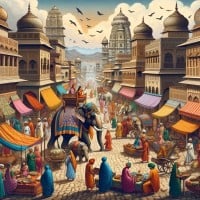
The ancient civilization of India developed along the Indus River and is known for its advanced urban planning, particularly in cities like Harappa and Mohenjo-Daro. The region saw the development of Hinduism and Buddhism and the establishment of powerful empires like the Maurya and Gupta dynasties.
India was one of the two major ancient Asian civilizations, along with China. The city of Mohenjo-Daro was one of the most innovative in ancient times, with plumbing, and was comparable to the cities of the Fertile Crescent. Later on, Aryan migrations brought their beliefs, combining with traditional Indian religions. Two of the major world religions, Hinduism and Buddhism, were developed.
Large empires such as the Mauryan and Gupta Empires were established. There were also achievements such as Arabic numerals, the understanding of zinc, better-quality medicine, the works of Kalidasa, yoga, knowledge of orbits in the solar system, algebra, the oldest dam in the world, snakes and ladders, chess, stupas, and more.
-
Persia
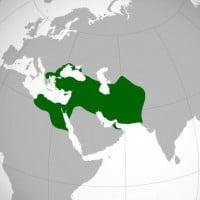
The Persian Empire, particularly during the Achaemenid period, was one of the largest empires of the ancient world, stretching from the Balkans to the Indus Valley. It is known for its administrative system, tolerance of different cultures, and the construction of the Royal Road.
Persians started the world's first largest empire, which was founded on morals. Persian kings did not believe in slavery and created the first declaration of human rights. They contributed so much to our world by creating the world's first gardens, inventing wine, alcohol for medical use, and being the main influence for Mediterranean food.
They invented the kebab, birthday parties, the first monotheistic religion, the first feasts, domestication of horses, backgammon, and their architectural influences spread to Europe, among other things. They have a history that dates back to almost 9,000 years!
Persia is an important part of history. This civilization is one of the main reasons we are as evolved in human rights and equality as we are. History isn't just about the countries still existing. It's about who and what has impacted our past and researching and acknowledging it.
I can't believe more people voted for Georgia! They were probably just looking at the fact that it was American and that it made a lot of money, but what about culture, tradition, and impact? Persia has made the human race better, and if you just look around, you can obviously see its effect on us. Without places like that, we would be heartless cavemen. Do you really want that, Georgia? (I don't like Georgia, as you can tell.)
-
Aztec Empire
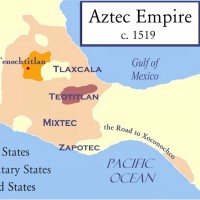
The Aztec Empire, centered in the Valley of Mexico, was known for its sophisticated agricultural practices and the construction of the capital city, Tenochtitlan. The civilization practiced human sacrifice and had a complex social, political, and religious structure.
European disease practically wiped out all the grandeur of this highly civilized society, which had not reached its peak when the Spanish invaders destroyed it. Many criticize it for its practice of human sacrifice, but the truth is most countries in Europe were killing more of their own people on a statistical level.
Tenochtitlan was an enormous city that stunned the Europeans when they first saw it. It had public schools, universities, hospitals, a high level of social structure, and education was free. It was bigger than any European city of its time and was filled with botanical gardens, none existing in Europe. Streets were clean, unlike European cities with ankle-deep sewage. Aztec poetry and philosophy were even more abundant than the better-known Greek productions.
It is also a myth that European superior technology defeated the Mexica Empire. It was disease. 95 percent of the 80 million native people of the Americas were wiped out in a few years after the arrival of the Europeans. And to think that most of the continent was not just highly populated but also highly developed, with technologies unknown in Europe.
-
Hunnic Empire

The Hunnic Empire, led by Attila, was a confederation of nomadic tribes from Central Asia that invaded parts of Europe in the 4th and 5th centuries. The Huns played a key role in the destabilization of the Western Roman Empire.
Although the Mongols and Huns are considered by some to be barbaric without influential cultural artifacts, etc., they should be considered very influential in world history by the fact that they had a huge impact on the forming of today's great nations (such as China, Russia, and so on). Also, if we consider the military to be an achievement, the military of Mongols and Huns should be considered the "Tour de force" of humankind.
And yes, they were mass killers. They threatened the so-called cultured civilizations. But it was what they did to survive in their land of harsh, the leftover lands of cold and hot. Seriously, people have been choosing to live in Hawaii rather than Anchorage.
-
Inca Empire
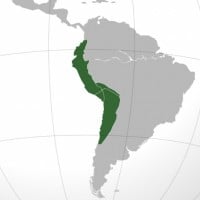
The Inca Empire, located in the Andean region of South America, was the largest empire in pre-Columbian America. It is known for its advanced engineering, including the construction of roads and terraces, and its centralized administration.
A culturally rich empire, the Incas assimilated many cultures. Their socioeconomic and political system was very developed, making the Inca Empire highly organized for their time. In times where other parts of the world suffered from starvation, the Incas had food reserves for the bad times, making their population virtually impervious to hunger or famine. They had a tax system called the "mita," which was a labor tax system.
The Inca Empire covered a very large geographical area, in fact, the largest in the Americas, and included countries such as Colombia, Ecuador, Peru, Bolivia, Chile, and Argentina. They had a very developed system of canals and aqueducts that provided irrigation and filtered water to their population. They were probably one of the few developed ancient civilizations that did not communicate with writing (because they did not know it) but had an alternative way to store communication called the "Quipus." Their constructions, which are still standing, are out of this world.
-
?
Kush Empire
The Kush Empire, located in Nubia along the Nile River, was known for its rich resources and cultural ties with ancient Egypt. It played a key role in regional trade and had its own pharaonic dynasties that ruled both Nubia and Egypt at various times.
A civilization overshadowed by Egypt yet they were very remarkable. For one, they were one of the few civilizations to halt Roman expansion and keep sub saharan Africa free from Roman expansion. Nubians had great engineering of their time with sewer pipes, public baths, the Sakia and Siege engines for war.
Probably the ancient civilization that actually treated women like humans. Rarely do you see big civilizations with as many as 20+ queens alone. In Kush, women were encouraged in everything from exploratory travels to science and technology.
Kush is one of those great places that understood sexism is irrational!
-
?
Afghanistan
Ancient Afghanistan was a crossroads of civilizations, influenced by Persian, Greek, and Indian cultures. The region saw the rise of the Greco-Bactrian and Kushan Empires, both vital to the spread of Buddhism and trade along the Silk Road.
History unmatched by any other ancient civilization. You wouldn't have bronze if it weren't for these people.
-
Maya Civilization
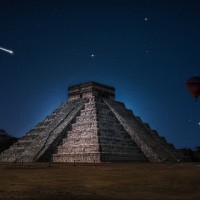
The Maya Civilization, centered in Mesoamerica, is famous for its achievements in mathematics, astronomy, and its complex writing system. The civilization built impressive city-states with pyramids and temples and practiced advanced agriculture.
Latest LiDAR maps show the Mayan world probably had upwards of 20 million people and an agricultural capability rivaling what California produces today. The Mayans were not a city-state but a megalopolis connected by causeways and canals. Couple this with their language, art, math, and astronomy, and the Mayans belong with the Chinese, Egyptians, etc. Amazing stuff, really.
The Mayans, a civilization wiped out swiftly by the savage Europeans before they could prove how impressive their work had been in civil engineering, mathematics, astronomy, and agriculture. The Mayans, with their great cities and histories, were wiped out, and their achievements, culture, and ancient past were completely forgotten and obliterated.
-
Scandinavia (Vikings)
The Vikings, originating from Scandinavia, were known for their seafaring skills, exploration, and raids across Europe between the 8th and 11th centuries. They also established trade routes and settlements from Iceland to Russia.
Vikings led fleets of longships throughout Europe in a campaign to invade and ransack other civilizations to obtain their resources. The Vikings also discovered America before any other Easterners. However, due to a lack of resources and personnel, they left it and returned home.
People may think of Vikings as mindless savages, but in reality, their civilization produced enormous changes in technology, seafaring abilities, and many other advancements.
The Norse civilization should be number 1. The Norse people were Germanic people who settled in Scandinavia. They had to live in one of the hardest places to farm, and back then, if you had a poor crop harvest, you would starve. But they got past that by raiding and trading with other European settlements to get food.
The Vikings were also very good explorers and sailors, being the first Europeans to discover Greenland and Canada. The Vikings could also navigate using the stars. Also, the Viking civilization never fell like Greece, Egypt, and Rome did. They just stopped being Vikings when they were converted to Christians.
-
Carthage
Carthage, located in present-day Tunisia, was a powerful Phoenician city-state that dominated trade in the Mediterranean from the 9th century BCE until its destruction by Rome in 146 BCE. Its rivalry with Rome led to the Punic Wars, pivotal conflicts in ancient history.
This should be number 1 in Africa. Carthage is situated on the coast of North Africa, in what is now Tunisia. It developed into a significant trading empire throughout the Mediterranean and was seen as home to a wealthy and brilliant civilization.
After a long conflict with the emerging civilization of Ancient Rome, known as the Punic Wars, during which advantage shifted from one side to the other, Hannibal conducted a campaign in Italy after first crossing the Alps. The tactical genius of Hannibal is still studied in our time. This is the best civilization ever, and it should be number 1.
The Carthaginians, led by Hannibal Barca, one of the greatest generals of all time, could crush the Romans in many battles even when outnumbered and when the enemy had the advantage. They will forever be known as the nation that brought Rome to its knees.
-
Japan
Ancient Japan, particularly during the Jomon and Yayoi periods, saw the development of pottery, agriculture, and early religious practices. The introduction of Buddhism and Chinese influences during the Asuka period greatly shaped its cultural and political institutions.
I'm voting for Japan because we are always forgotten by people from the West.
Ancient Greece was pretty great, but *everything* came from them?!? That's just Western-centralized thinking.
I think you forgot about *ahem* Asia *ahem*. Japan was the only civilization that the Mongols tried to attack *twice* and gave up. During this time, Europe was in the Dark Ages - a collapse so significant that the Mongols didn't even think it was worth invading.
Japan is an ancient country with great buildings and innovation, such as the ironclad. Despite having a great population on a little land, even in the 11th/12th century, Japan had more people than all the European countries. It had impressive urbanism in its great cities, such as Edo. The Japanese people had Murasaki Shikibu, the most ancient literary book writer, having written the Genji Monogatari, the oldest romance in the world.
-
Babylonian Empire
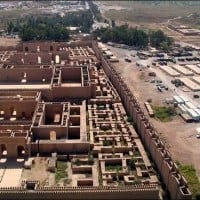
The Babylonian Empire, located in Mesopotamia, is renowned for its contributions to law, particularly the Code of Hammurabi. It also made significant advances in astronomy and mathematics.
The birthplace of the oldest hero in history, Gilgamesh, the Babylonian Empire was honestly the best civilization in history. They were the first to invent many important things, which proved how smart and amazing they were. These inventions include the wheel, the chariot, the sailboat, time, the map, writing, mathematics, astronomy, and astrology.
It's really overwhelming to stand next to the Ishtar Gate and think it was built by the very hands of those creative people. It truly deserves the name of The Cradle of Civilization.
Absolutely most influential. Babylonian ideals developed our Western religions, philosophies, stories, science, and more. The Greeks were indebted to them, as Alexander noted.
-
Mesopotamia
Mesopotamia, often referred to as the cradle of civilization, saw the rise of some of the earliest known societies, including Sumer and Akkad. It is credited with the invention of writing (cuneiform), urban development, and the establishment of early law codes.
Ancient Mesopotamia might not be here anymore, but the civilization was great. Mesopotamia was one of the first civilizations. They invented many things we have today, but with better improvements.
Some say they're the oldest civilization.
They have such an interesting variety of inventions because of the war.
-
Macedonia
The Kingdom of Macedonia, under leaders like Philip II and his son Alexander the Great, became a major military and cultural power in the ancient world. Alexander's conquests spread Greek culture across the Near East and into Asia.
Ancient Macedonia was not Ancient Greece - it was Hellenistic, or an imitation of Greek culture. Alexander the Great led the Macedonian empire and was able to claim the largest empire in history, spanning from Greece all the way to India. If Alexander's soldiers hadn't grown tired of war and wanted to go back to their families, Alexander would probably have been able to conquer even more.
Ancient Greeks were Macedonians, not the other way around. There should be people who have studied history to tell everything correctly. Nobody can change history! Everyone can predict anything, everyone can change said words, or tales, stories, but nobody, nobody can change the written evidence!
Alexander the Great was Macedonian, and the Greeks were Macedonians, except those who lived near Athens. You should read first, educate yourselves, then you should dare to speak about history!
-
Turkey
Ancient Turkey, known as Anatolia, was home to several advanced civilizations, including the Hittites and the Lydians. It was a crucial region in trade and cultural exchange between Europe and Asia.
Turks have established 18 empires throughout their history and have conquered all of the known world. The West has had to make up alternative narratives to curtail Turkish nationalism from reemerging in its greatness and dominating the Middle East and Europe in the 20th century.
The most significant legacy in most of Central Asia, the Black Sea, and Eastern Europe is of Turkish origin. The world has never known more powerful and benevolent conquerors than the Turks, and the Turks will soon rise again in their ferocious glory.
The oldest and continuously inhabited land in history. Often, multiple empires and kingdoms co-reigned. Land of the most spoken languages of all time. Traces of various levels of civilization over 10,000 years.
The spot of the most desired land in history and even today. And even today, 16 languages are spoken.
-
France
Ancient France, primarily known as Gaul during the Roman era, was home to Celtic tribes before being conquered by Julius Caesar in the 1st century BCE. The region later became a core part of the Roman Empire and a center of European medieval history.
-
Ancient Israel
Ancient Israel, centered in the Levant, saw the rise of the Kingdoms of Israel and Judah in the Iron Age. It is significant for its religious and historical impact, especially in the development of Judaism, Christianity, and Islam.
According to modern Jews, the Dome of the Rock is an abomination and desolation of the site of the Temples on Mount Moriah. It is occasionally described as the Abomination of Desolation. However, it does typify the peak of Arabian and Muslim architecture, dominating the city at the very heart of the City of David.
And the Christ was born in Bethlehem and spent his childhood in Egypt, fleeing from Herod, and in Nazareth. He only visited Jerusalem for the Holy Feasts and during his Ministry.
Israel spread belief in one God, conquered all of the nations in Israel, and the Davidic dynasty helped Israel develop into one of the greatest civilizations of all time.
-
Umayyad Caliphate
The Umayyad Caliphate (661 to 750 CE) was the second major Islamic caliphate after the Rashidun, with its capital in Damascus. It expanded across the Middle East, North Africa, and into parts of Europe, leaving a lasting cultural and political impact.
-
Indus Valley Civilization
The Indus Valley Civilization, one of the world's earliest urban societies, thrived from around 3300 BCE to 1300 BCE in present-day Pakistan and northwest India. It is known for its advanced cities, trade networks, and early use of writing and planned urban layouts.
The Indus Valley was the most advanced of the old civilizations. I daresay it was better than Mesopotamia, Egypt, Greece, China, Turkey, Japan, Tibet, the Mongols, and even the bloody Romans. I think it was even superior to 17th and 18th-century England (the Indus Valley had toilets). It should be a civilization to be remembered for all time and history.
The Indus Valley was extremely advanced with their water and sewer systems. They learned to trap the water every year during the flood and use it all year for drinking water and to water crops. They mysteriously disappeared, and still, no one knows what happened to them. Pretty cool.
-
Armenian Empire
The Armenian Empire, especially during the reign of Tigranes the Great in the 1st century BCE, became a powerful regional state that stretched from the Mediterranean to the Caspian Sea. It played a key role in interactions between Rome, Parthia, and other neighboring powers.
Ancient Armenia was a rocky land of ravines, rivers, rugged cliffs, and hundreds of stone monuments and churches.
De Morgan has said there are signs that show that the Armenians, like their other Aryan relatives, were nature worshipers, and that this faith in time was later changed to the worship of national gods, many of which were the equivalents of the gods in the Roman, Greek, and Persian cultures. The main proto-Armenian (Aryan) god was Ar, the god of Sun, Fire, and Revival.
It should be in the top 3, at least. It's older than the Roman Empire. The churches, ancient items, and constructions revealed recently are evidence that Armenia is one of the oldest nations in the world and a cradle of civilization.
-
Assyrian Empire
The Assyrian Empire, centered in northern Mesopotamia, was a powerful military state known for its conquests and administrative innovations. It built one of the earliest empires in history and established a network of roads and communication systems.
One thing that probably made the Assyrians so great at fighting was their philosophy that if they ever lost a battle, their empire would crumble and end. The Assyrians seemed invincible and conquered the entire region. They were able to strike fear into the hearts of their enemies. The Assyrians were also one of the most brutal peoples.
I'm learning about the Assyrian Empire in school. The Assyrians used ziggurats to worship their gods and held religious ceremonies to make food sacrifices. Note - they did not make human sacrifices - that's good!
-
Andalusia
Andalusia was the southernmost region of the Iberian Peninsula. It was known for its Islamic Golden Age under Muslim rule from the 8th to the 15th century and became a center of science, philosophy, and architecture, blending Islamic, Christian, and Jewish cultures.
The country's soil is fertile because the crops of that time are still grown today.